

Make / Model Search
OptionsCar reviews - Mitsubishi - Triton - Long-Term TestMitsubishi modelsOverviewWe hitch our wagon to the long-term Triton to see how it performs as a tow vehicle14 Nov 2025 By MATT BROGAN Update #2 – Towing
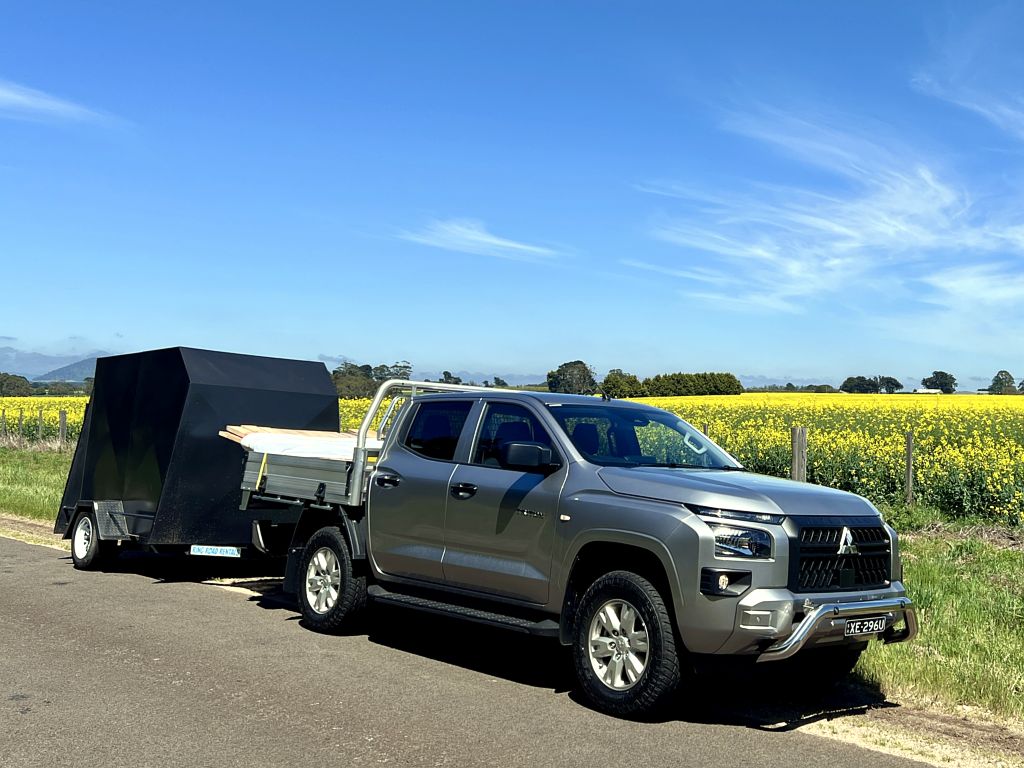
THE Mitsubishi Triton long-term evaluation is nearing the end of its first month, the vehicle managing well the tasks a ute is expected to carryout, most recently including the towing of a weighted trailer and some timber ballast over a 300km mix of highway and C roads in central Victoria.
Hitched to a single-axle trailer weighted to 1300kg and with a couple of hundred kilograms on the alloy tray, we ran the Triton over the weighbridge, noting 3940kg in combination, or 2310kg less than the permitted maximum GCM.
While an adjustable hitch would have helped level the combination a little better, the standard setup still towed smoothly. The additional weight on the hitch (and in the tray) settled the rear of the Triton very well, diminishing much of the leaf spring jitter noted when running unladen.
Yet, the rear suspension retained enough compliance to deal with the lumpy C roads (and A road potholes) encountered on our trek, the damping action sufficient to quell larger movements without negatively impacting the Triton’s intended attitude.
Impressively, much of the Triton’s pitch and steering response remained unfazed, suggesting excellent longitudinal rigidity through the chassis – and a damn good suspension tune.
And while much of those results are likely expected, given Mitsubishi’s know-how in the field, it’s the new twin-turbocharged engine we were most keen to put through its paces.
Drivers familiar with the Pentland Hills west of Melbourne know well the extent to which the steep, sustained grade can dent performance. But not for the Triton…
Depending on the section of road in question, the 4N16-series 2.4-litre unit sat happily at around 2900rpm, just above the quoted maximum torque range (470Nm between 1500-2750rpm) but beneath its peak power value (150kW at 3500rpm).
Fourth and fifth gear were favoured for the majority of the climb, this driver finding it preferable to use the six-speed automatic transmission’s manual selector to ‘hold’ an appropriate ratio in the absence of any ‘Tow Mode’ or similar.
On downhill runs the transmission seemed happier when left to its own devices. The unit shifted to fifth gear as required to provide some engine braking on longer descents, but in shorter, steeper sections we found manual selection to fourth or third gear a better alternative.
Fuel consumption for the 367km round trip finished at 12.6 litres per 100km meaning owners should expect a driving range of 595km when towing at a similar capacity (and in similar terrain).
We would fully expect this figure to improve without the Pentland Hills thrown into the mix, but felt the added strain was important to a fuller understanding of the Triton’s performance.
Visit GoAuto again soon for our next long-term update of the 2025 Mitsubishi Triton GLX+ or click on the links below to read past updates.
2025 Mitsubishi Triton GLX+ long-term test:
 Read more30th of October 2025  2025 Mitsubishi Triton Long-Term Test – Part 1Mitsubishi’s strong-selling Triton ute joins the GoAuto garage for three months3rd of April 2025 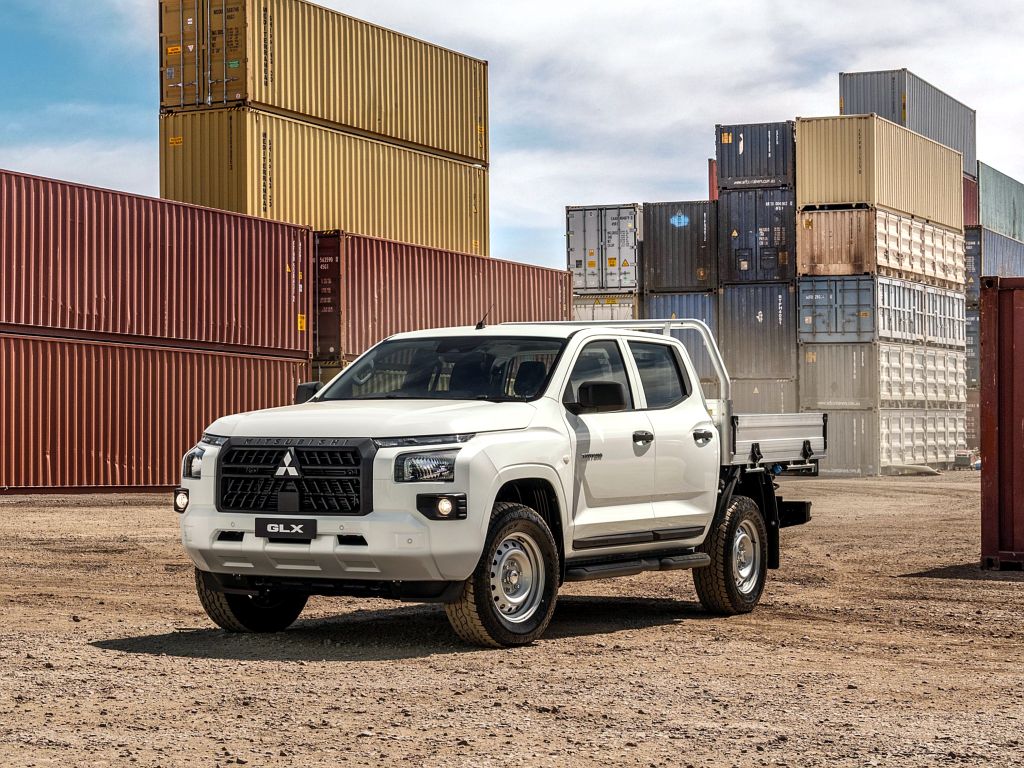 Mitsubishi adds body styles to Triton rangeMore Triton choices available soon as cab-chassis, Single and Club cabs filter through4th of February 2025  Mitsubishi introduces Triton GSR Special EditionFlagship dual-cab ute arrives in Mitsubishi range, Triton GSR Special Edition from $63,140 |
OptionsClick to share
|


 Alfa Romeo
 Abarth
 Audi
Audi Aston Martin
 BMW
BMW Bentley
 Ferrari
 Chevrolet
 Ford
Ford Fiat
Fiat GWM
GWM Foton
Foton Hyundai
 Honda
Honda Jaguar
 Isuzu
Isuzu Kia
Kia Jeep
Jeep Land Rover
 Lamborghini
 Maserati
 Lexus
Lexus McLaren
 Mazda
Mazda MG
MG Mercedes-Benz
 Mitsubishi
 Mini
Mini Peugeot
 Nissan
 Ram
Ram Porsche
 Rolls-Royce
 Smart
Smart Skoda
Skoda Suzuki
 Subaru
 Toyota
 Tesla
Tesla Volvo
Volvo Volkswagen
 Zeekr
Zeekr

Connect with us


Facebook Twitter Instagram